Product introduction
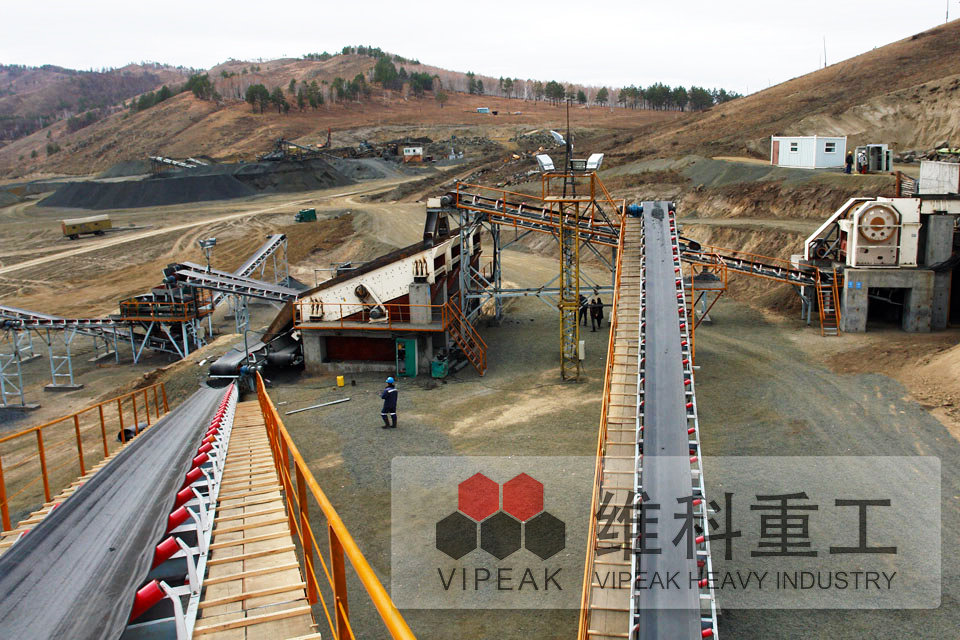
Belt conveyor is a kind of machine that transfers the material continuously. The belt works under the effect of frictional force. It is not only the component to transfer the material, but also the components to transfer the force. Vipeak belt conveyor is advanced and simple in structure, easy to maintain. Transfer capacity is more higher, and transfer distance more longer. It is widely used in mining, metallurgical and coal industry to transfer sandy or lump material, or packaged material. In many situation, it is a very important component of nonstandard machinery.
The belt conveyor is composed of standard parts, advanced and simple in structure, easy to maintain. They are widely used in mining, metallurgical and coal industry to transfer sandy or lump material, or packaged material. According to different transferring equipment, the transfer system can be one independently or multi-conveyors or combined with other transfer equipments. It can be installed horizontally or aslope to meet the needs of different transfer lines. The conveyor can be operated in the circumstance temperature range from -20℃ to +40℃. Temperature of transferred material by this belt conveyor should be lower than 50℃.
Product superiority
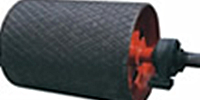
Roller
Roller is the main part for power transmission.
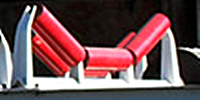
Carrier Roller
Control horizontal positions; reduce the impact of material.
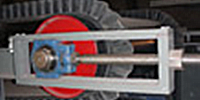
Tensioning Gear
Belt conveyor get tension to avoid slipping; deflection is under control.
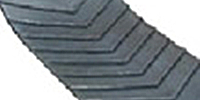
High Capacity
High quality of belt conveyor; large dip angle and high delivery value conveying, slipping and maturing is could be avoided.
Working principle
Belt conveyor is composed of rollers and closed conveyor belt. There are two rollers, one is for driving conveyor rotating, another one is for changing the motor direction of conveyor. Head roller is drived by motor, conveyor is draged by force of friction, which is generated from head roller and conveyor. Head roller is often set in the discharging end to increase traction for a better dragging. Material is fed from feed end and falls on the rotating conveyor belt, and discharged by conveyor delivery end.
Technical Parameters
Specification and Technical Parameter:
|
Belt Width (mm) |
)Belt Length (m) / Power (kw) |
Belt Speed (m/s) |
Capacity (t/h) |
|
400 |
≤12/1.5 |
12-20/2.2 |
20-25/3 |
0.8-2 |
40-80 |
|
500 |
≤12/3 |
12-20/4 |
20-30/5.5 |
0.8-2 |
78-191 |
|
650 |
≤12/4 |
12-20/5.5 |
20-30/7.5 |
0.8-2 |
131-323 |
|
800 |
≤10/4 |
10-15/5.5 |
15-25/7.5 |
1.0-2 |
278-546 |
|
1000 |
≤10/5.5 |
10-20/7.5 |
20-25/11 |
1.0-2 |
435-853 |
|
1200 |
≤10/7.5 |
12-20/11 |
20-25/15 |
1.0-2 |
655-1284 |
|
Note: actual power will be decided by the complete set. |
Max. angle when working:
|
Material |
β |
Material |
β |
Material |
β |
Material |
β |
|
Lump coal |
18° |
0-120mm ore |
18° |
Wet concentrate (moisture 12%) |
20° |
Salt |
20° |
|
raw coal |
20° |
0-60mm ore |
20° |
Dry concentrate |
18° |
Moulding sand |
24° |
|
Coal powder after washing① |
21° |
40-80mm bituminous shale |
18° |
limestone |
12° |
Waste sand |
20° |
|
Hard coke after screening |
17° |
20-40mm bituminous shale |
20° |
dry sand |
15° |
Stone without screening |
18° |
|
0-25mm hard coke |
18° |
0-200mm bituminous shale |
22° |
Sand mixed with gravel |
18-20° |
cement |
20° |
|
0-3mm hard coke |
20° |
Dry and loose earth |
20° |
Quarry sand |
20° |
Blocky dry clay |
15-18° |
|
0-350mm ores② |
16° |
Wet earth |
20-23° |
Wet sand |
23° |
Powder dry clay |
22° |
|
Note:①Including clean coal,middings coal and waste coal. ②Including ferrous metal, non-ferrous metal, rock, limestone and so on. |